Hivetechstack

Tag: artificial-intelligence

  • Machine Learning Development Services: Powering the Future of Intelligent Software

    In a world driven by data, machine learning (ML) has evolved from a futuristic concept to a cornerstone of modern digital solutions. Enterprises today are harnessing its capabilities to automate processes, unlock predictive insights, and create smarter applications. As industries mature, so do the demands on their data infrastructure—making machine learning more than just a technology, but a business imperative.

    This article explores the scope of machine learning development services, how they’re transforming different industries, and what businesses need to know when integrating them into their operations.


    Industry Applications of Machine Learning

    Machine learning is not limited to tech giants. From finance to manufacturing, its applications are transforming sectors by enabling real-time decisions, optimizing resources, and predicting trends.

    1. Finance and Banking

    Financial institutions utilize ML for fraud detection, algorithmic trading, and credit scoring. Predictive models analyze transaction patterns to flag anomalies in real-time, reducing the risk of financial fraud. Moreover, customer segmentation and personalized product recommendations enhance user engagement and retention.

    2. Healthcare and Life Sciences

    In healthcare, machine learning plays a crucial role in diagnostics, drug discovery, and personalized treatment plans. Algorithms can detect anomalies in radiology images with high accuracy or predict disease risk based on a patient’s medical history, improving both preventative care and clinical efficiency.

    3. Retail and eCommerce

    ML is powering recommendation engines, dynamic pricing models, and inventory forecasting. Personalized product suggestions based on customer behavior drive higher conversion rates. Real-time analytics support better decision-making for promotions and logistics.

    4. Manufacturing and Supply Chain

    Predictive maintenance, quality control, and supply chain optimization are leading use cases. ML-driven models reduce equipment downtime and enhance operational efficiency by predicting failures before they occur.


    Types of Machine Learning Models

    Understanding different ML model types helps businesses determine the right approach for their specific needs.

    Model TypeDescriptionCommon Use Cases
    Supervised LearningTrained on labeled data to predict outcomesFraud detection, customer segmentation
    Unsupervised LearningDiscovers hidden patterns in data without labelsMarket basket analysis, clustering
    Reinforcement LearningLearns through trial and error using rewardsRobotics, gaming, dynamic pricing
    Semi-Supervised LearningUses a mix of labeled and unlabeled dataMedical image analysis, voice recognition

    Custom ML Solutions for Business

    Every business has unique datasets and challenges. Off-the-shelf models rarely deliver the desired results, which is why custom solutions are crucial.

    Here’s how tailored ml development services deliver business value:

    • Data preprocessing & pipeline automation: Clean and transform raw data into usable formats.
    • Model selection & training: Choose the best algorithm (e.g., decision trees, SVM, neural networks) based on the business case.
    • Evaluation and tuning: Metrics like precision, recall, and F1-score ensure the model’s reliability.
    • Deployment and integration: Seamlessly embed the model into existing systems or apps.

    When done right, these stages convert business data into intelligent insights, predictive capabilities, and automated actions.


    Challenges in ML Implementation

    Despite its transformative potential, machine learning comes with unique hurdles:

    • Data quality and availability: ML thrives on good data. Incomplete or biased datasets lead to unreliable models.
    • Scalability: As data grows, so does the need for more robust computational resources.
    • Model interpretability: Especially in regulated industries like healthcare or finance, explaining model outcomes is just as critical as accuracy.
    • Integration into workflows: Embedding ML models into live environments without disrupting existing operations requires careful engineering.

    Addressing these challenges often calls for specialized AI Integration Services that align technical implementation with business objectives.


    The Role of Data Integration

    Data is the backbone of machine learning. Successful ML projects depend heavily on how well data is collected, cleaned, and unified. This is where robust data integration strategies play a pivotal role.

    Platforms like AI and ML in Data Integration demonstrate how unifying disparate datasets through pipelines can improve model accuracy and reliability. Integrating siloed information across departments ensures a 360-degree view of business operations, empowering better predictions and decision-making.


    Machine Learning in Modern Applications

    From virtual assistants to logistics management platforms, modern applications increasingly rely on ML to deliver intelligent features.

    Examples include:

    • Chatbots with natural language understanding
    • Recommendation engines for streaming or eCommerce
    • Demand forecasting in inventory management
    • Customer behavior prediction in marketing automation
    • Risk scoring systems in insurance and lending

    Such applications often require deep collaboration with a machine learning app development company to ensure seamless frontend-backend integration, real-time processing, and ongoing model retraining.


    Enterprise-Grade ML Development

    As businesses seek production-ready solutions, working with an experienced machine learning development company becomes critical. Enterprise-grade ML systems require:

    • Strong architecture (cloud, on-prem, hybrid)
    • Continuous integration and deployment pipelines (CI/CD)
    • Compliance with security and data privacy standards
    • Scalable infrastructure for retraining and deployment

    Whether it’s a fintech startup or a multinational enterprise, scalable ml development company solutions ensure that models continue to perform accurately as data and user behavior evolve.


    Key Capabilities of ML App Development Firms

    A capable machine learning app development company offers end-to-end solutions that include:

    • Feasibility analysis
    • Prototype development and testing
    • API integration for data ingestion and model output
    • Model versioning and audit logging

    These services not only ensure technological robustness but also maintain compliance and transparency.


    Future of Machine Learning

    Machine learning is evolving rapidly with trends like federated learning, AutoML, and explainable AI (XAI). These advancements are making ML more accessible, privacy-conscious, and interpretable.

    Companies seeking future-proof solutions now look for partnerships with an ai ml development company that can navigate this evolving landscape while maintaining a strong technical foundation.


    Final Thoughts

    Machine learning is no longer experimental—it’s essential. From healthcare diagnostics to retail personalization, the real-world value of intelligent systems is clear. Businesses that proactively adopt machine learning are poised for agility, growth, and lasting competitiveness.

    For enterprises looking to explore or expand their ML initiatives, a trusted machine learning development company can provide the tools, talent, and transformation required to succeed.
  • How Generative AI Development Companies Are Redefining Innovation in 2025

    Generative AI is no longer just a buzzword. In 2025, it stands as one of the most transformative technologies across industries—from marketing and design to medicine, finance, education, and enterprise automation. Organizations looking to integrate this cutting-edge technology into their workflows are increasingly turning to specialized generative AI development companies.

    But with a growing list of providers and solutions, how do you identify the right partner for your generative AI journey? Let’s explore the critical aspects you should understand when evaluating a development company and why the market for GenAI is more important now than ever before.


    What Does a Generative AI Development Company Do?

    At its core, a generative AI development company specializes in designing, building, and deploying models that can create human-like content—be it text, images, code, audio, or synthetic data. These companies often work with foundational models like GPT, DALL·E, Stable Diffusion, Claude, and others to build:

    • AI chatbots that understand tone and context
    • AI design tools that generate branded assets on demand
    • Data summarization and transformation platforms
    • Intelligent assistants for customer support, sales, and internal operations

    They combine expertise in machine learning, natural language processing, large language models (LLMs), and application development to create tailored solutions.


    Why Businesses Are Prioritizing Generative AI in 2025

    From startups to Fortune 500s, generative AI has moved from pilot projects to production-grade implementations. The reason is simple: GenAI tools significantly reduce operational costs, increase personalization, and unlock new capabilities that were not feasible through traditional automation.

    Key drivers include:

    • Productivity Boost: Generative AI accelerates time-to-market for content, products, and services.
    • Enhanced User Experience: More intelligent and dynamic interactions improve engagement.
    • Cost Optimization: AI systems reduce the need for repetitive manual labor.
    • Data Utilization: Unstructured data can now be leveraged meaningfully at scale.

    As a result, organizations are actively seeking partners who offer Generative AI Development Services with real-world impact.


    Core Capabilities of a Gen AI Development Company

    When assessing a GenAI development company, it’s essential to go beyond surface-level claims and evaluate their technical competencies. Here’s what leading providers offer:

    1. Model Customization

    They don’t just deploy off-the-shelf models. Instead, they fine-tune LLMs to align with your brand voice, context, and objectives.

    2. Full-Stack AI Integration

    Top-tier companies build end-to-end platforms—from data ingestion pipelines and model training to deployment and UI/UX integration.

    3. Data Security and Governance

    They ensure compliance with regional and industry-specific data protection regulations. This includes features like data masking, differential privacy, and access control.

    4. Domain-Specific Expertise

    Whether it’s legal tech, healthcare, or fintech, a reliable partner brings domain experience to improve accuracy and relevancy.


    Use Cases Driving Generative AI Adoption

    Organizations are using generative AI in a wide array of scenarios. Here are a few high-value applications:

    IndustryUse CaseImpact
    HealthcareClinical report generation, drug discoveryFaster research & improved diagnosis
    FinanceReport automation, fraud detectionLower costs and real-time risk analysis
    E-commerceProduct descriptions, chatbotsIncreased conversions & 24/7 support
    EducationPersonalized tutoring, AI content creationImproved learning outcomes & efficiency
    MediaScriptwriting, image generationStreamlined production and ideation

    These results are only possible when working with a leading generative AI development company that understands both the technical and business landscape.


    Choosing the Right Generative AI Development Firm

    Given the sheer number of service providers, identifying the best-fit generative AI development firm can be challenging. Here’s what you should evaluate:

    • Portfolio Depth: Check case studies and client success stories.
    • Technology Stack: Ensure they work with modern LLMs and tools (e.g., OpenAI, Anthropic, LangChain).
    • Customization Capabilities: Look for companies offering personalized model training and workflow integration.
    • Deployment Flexibility: They should support cloud, on-premises, or hybrid models based on your compliance needs.
    • Cross-Industry Experience: A diversified client base usually signals scalable expertise.

    You can explore top companies in this domain on top generative AI development companies.


    How Generative AI Services Are Being Productized

    More than just development, generative AI services today are being offered as scalable SaaS solutions and APIs. Some common offerings include:

    • AI-as-a-Service platforms that enable content generation via simple interfaces
    • Plugins and extensions that bring GenAI capabilities into CRM, ERP, or CMS systems
    • Model-as-a-Service where enterprises can train, host, and monitor their own custom models

    This shift towards productization is helping organizations democratize access to AI capabilities without building from scratch.


    Global Hubs for Generative AI Development

    The USA remains a major innovation hub for GenAI. A growing number of startups and enterprise solution providers have emerged, making the Generative AI Development Company in USA keyword more than just a tag—it’s now a hallmark of cutting-edge development.

    Likewise, countries like Canada, the UK, India, and Germany are seeing a spike in demand, thanks to favorable regulations, skilled talent pools, and cross-border AI research collaborations.


    The Competitive Landscape of Generative AI Development Companies

    The number of generative ai development companies has surged in response to enterprise demand. However, very few offer:

    • End-to-end consulting and implementation
    • Transparent pricing and milestones
    • Long-term support for scaling models

    This is where working with a trusted gen ai development company makes all the difference ensuring you move from experimentation to enterprise-level deployment.

    If you’re exploring this space, check out generative AI development to understand what’s possible.


    Final Thoughts

    As businesses continue to prioritize efficiency, creativity, and personalization, generative AI will become a strategic advantage. Choosing the right partner one that understands your industry, your data, and your vision is key to unlocking its full value.

    Whether you’re just getting started or looking to scale existing implementations, collaborating with an experienced generative ai development company can be the catalyst for long-term innovation.

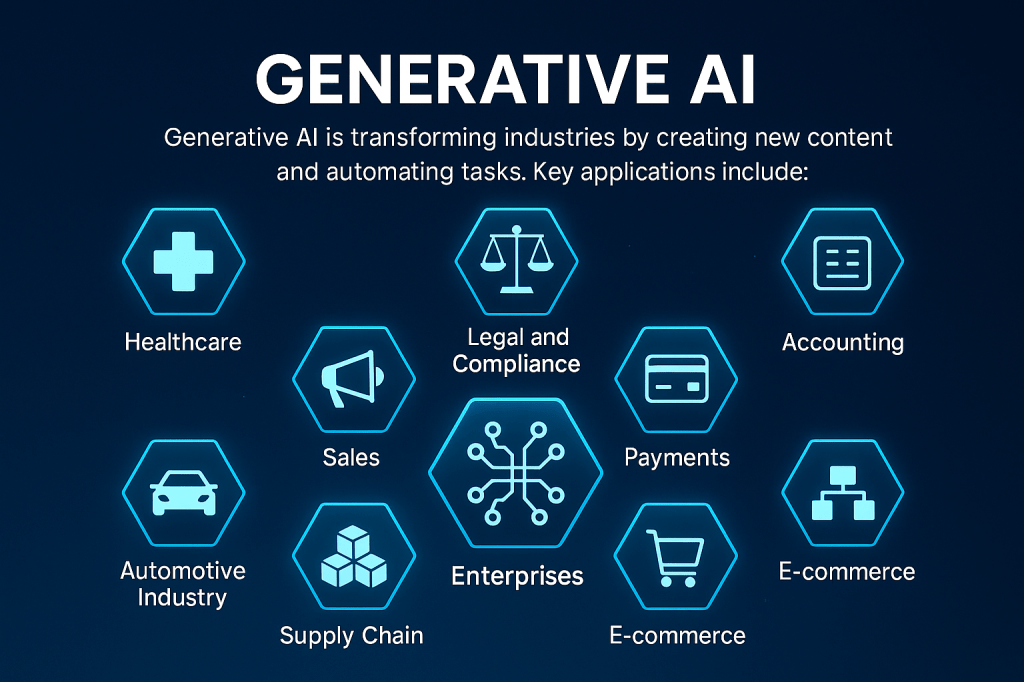
  • Generative AI: Transforming Industries with Intelligent Innovation

    Generative AI is revolutionizing industries across the board by automating complex processes, enhancing decision-making, and personalizing experiences at an unprecedented scale. Today, businesses from healthcare to automotive are embracing this powerful technology to gain a competitive edge, optimize operations, and deliver more value to customers. Let’s explore in-depth how Generative AI is reshaping key sectors.


    Generative AI for Healthcare

    In healthcare, Generative AI is playing a pivotal role in clinical decision support, personalized treatment planning, and drug discovery. Advanced AI models are trained to simulate patient conditions, predict disease progression, and even suggest tailored therapies.

    • Drug Discovery: Generative models can predict molecular structures, significantly accelerating the discovery phase.
    • Medical Imaging: AI-driven image generation enhances diagnostics by providing clearer, augmented imaging outputs.

    To dive deeper, check this detailed overview: Generative AI in Healthcare.

    Generative AI for Legal and Compliance

    Compliance-heavy industries like legal services are leveraging Generative AI to streamline document review, contract analysis, and regulatory monitoring. AI models can generate case summaries, predict legal outcomes, and identify compliance gaps in real-time, reducing human error and increasing operational efficiency.

    For an in-depth view, visit Generative AI for Compliance.

    Generative AI in Accounting

    Generative AI in Accounting transforms traditional bookkeeping by automating transaction categorization, generating financial reports, and forecasting cash flows. AI models trained on historical data can simulate future financial scenarios, helping firms and enterprises make informed strategic decisions.

    Explore more: Generative AI in Accounting.

    Generative AI in Sales

    Sales teams are deploying Generative AI to create personalized customer pitches, automate follow-up communications, and optimize lead scoring. By analyzing past interactions, AI generates sales strategies that significantly improve conversion rates and customer retention.

    Learn how: Generative AI in Sales.

    Generative AI in Payments

    In the financial sector, Generative AI is redefining payment systems by detecting fraud patterns, generating personalized financial recommendations, and optimizing transaction processing. Intelligent models ensure safer, faster, and more customer-centric payment experiences.

    Understand the full impact here: Generative AI in Payments.

    Generative AI for Enterprises

    Enterprises are increasingly seeking custom Generative AI services to automate operations, personalize customer experiences, and generate new revenue streams. From HR automation to marketing content creation, generative models are embedded across functions to drive productivity and innovation.

    Discover more here: Generative AI for Enterprises.

    Generative AI in Automotive Industry

    The automotive sector is experiencing a major shift with Generative AI applications in design automation, autonomous driving simulations, and predictive maintenance.

    • Vehicle Design: AI models generate innovative vehicle designs that enhance aerodynamics and sustainability.
    • Predictive Maintenance: Simulated failure scenarios help manufacturers preemptively fix issues, reducing downtime.

    Detailed insights here: Generative AI in Automotive Industry.

    Generative AI in Supply Chain

    Supply chains, often burdened by inefficiencies, are being optimized through Generative AI. AI predicts demand patterns, generates optimized inventory models, and simulates supply chain disruptions to build resilience.

    Learn how it’s reshaping logistics: Generative AI in Supply Chain.

    Generative AI in E-commerce

    In e-commerce, Generative AI is utilized for product description generation, personalized product recommendations, and customer service chatbots. Retailers benefit from increased sales, higher engagement rates, and streamlined operations.

    Explore more strategies here: Generative AI in E-commerce.

    Generative AI for Insurance

    Insurance companies are adopting Generative AI to automate claims processing, assess risks, and create personalized insurance plans. By simulating numerous risk scenarios, AI assists insurers in pricing premiums more accurately and efficiently.

    Dive into the innovations: Generative AI for Insurance.


    How Businesses Can Leverage Generative AI

    Organizations aiming to stay ahead in this AI-driven era must engage with experienced generative ai consulting services to ensure successful implementation. Partnering with a trusted generative ai consulting company can unlock transformative growth.

    Choosing the right partner matters:

    • Expertise: Look for generative ai consultants with deep domain knowledge.
    • Customization: Select a team that offers custom generative AI services tailored to your business needs.
    • Credibility: Evaluate generative ai consulting companies based on proven results and client testimonials.

    SoluLab stands out as a top choice in this space. Learn more about their capabilities here: Generative AI Consulting Company.

    If you’re ready to unlock the full potential of Generative AI, partnering with industry experts like SoluLab ensures a seamless journey from ideation to execution. Visit SoluLab to explore how they can help transform your business future.


    Conclusion

    Generative AI is no longer just a futuristic concept – it is a powerful tool redefining the way industries operate. Whether it’s improving healthcare outcomes, revolutionizing automotive design, or enhancing e-commerce experiences, businesses embracing this wave of innovation are positioning themselves for sustainable success. The key lies in choosing the right consulting partner who understands your unique needs and helps you harness the transformative capabilities of Generative AI.

  • How AI Is Transforming Modern Industries: Use Cases from Fintech to Genomics

    Artificial Intelligence (AI) is no longer a buzzword—it is a transformative force redefining how industries operate, make decisions, and deliver value to their customers. From enhancing customer experiences in CRM to accelerating precision medicine in genomics, AI has become a cornerstone of modern business strategy.

    Below, we explore real-world applications of AI across six distinct industries—fintech, genomics, aviation, CRM, KYC, and content creation—and examine how AI development companies are building future-ready solutions.


    AI in Fintech: Driving Smarter Financial Decisions

    Fintech is among the earliest adopters of artificial intelligence, leveraging its capabilities to improve operational efficiency, reduce fraud, and personalize financial services. By analyzing massive datasets in real time, AI enables predictive analytics, risk scoring, and customer behavior modeling.

    A few impactful applications include:

    • Fraud Detection: Machine learning models analyze transaction patterns to detect and prevent suspicious activities in milliseconds.
    • Credit Scoring: AI uses alternative data (e.g., mobile phone usage, social activity) to score unbanked individuals more accurately.
    • Chatbots & Robo-Advisors: Personalized financial advice and 24/7 support are delivered through AI-driven interfaces.

    According to SoluLab’s detailed breakdown on AI in Fintech, the implementation of intelligent systems is reducing loan approval time by up to 80% and operational costs by nearly 30% across digital finance firms.


    AI in Genomics: Accelerating Precision Healthcare

    The role of AI in genomics is groundbreaking. By processing vast amounts of genomic data, AI models help identify gene-disease associations, optimize drug discovery, and tailor personalized treatments.

    Key use cases:

    • Variant Calling: AI detects genetic variants with high accuracy, reducing dependency on manual curation.
    • Drug Target Discovery: Predictive algorithms identify potential therapeutic targets faster than conventional methods.
    • Genomic Pattern Recognition: Machine learning identifies complex patterns and correlations in DNA sequences that humans might miss.

    As noted in SoluLab’s article on AI in Genomics, AI has enabled a 60% reduction in research timeframes for biotech firms developing rare disease treatments.


    AI in the Aviation Industry: Enhancing Efficiency and Safety

    In aviation, artificial intelligence is revolutionizing everything from maintenance operations to flight planning and passenger experience.

    Major applications include:

    • Predictive Maintenance: AI predicts potential equipment failures before they occur, saving millions in repair costs.
    • Smart Scheduling: Algorithms optimize flight schedules and resource allocation in real time.
    • Customer Personalization: AI tailors travel experiences by analyzing individual preferences and behavior.

    SoluLab’s insights on AI in the Aviation Industry reveal that some airlines have reduced maintenance-related flight delays by over 25% through AI-driven diagnostics and automation.


    Integrating AI into CRM: Creating Hyper-Personalized Customer Experiences

    Customer Relationship Management (CRM) platforms are evolving rapidly with the integration of AI. AI transforms CRM systems from static databases into intelligent tools capable of predictive lead scoring, customer segmentation, and behavioral analytics.

    What AI adds to CRM:

    • Sentiment Analysis: Understand customer emotions through NLP to better personalize communication.
    • Lead Prioritization: Rank prospects based on engagement, intent, and readiness to convert.
    • Churn Prediction: Identify customers likely to leave and trigger proactive retention strategies.

    With solutions discussed in Integrating AI into CRM, businesses are seeing a 45% boost in customer satisfaction and significant sales uplift through smarter targeting.


    AI in KYC (Know Your Customer): Making Compliance Smarter and Faster

    KYC is a regulatory requirement that is often costly and time-consuming. AI simplifies and accelerates the KYC process by automating identity verification, monitoring transactions, and flagging anomalies.

    Here’s how AI is reshaping KYC:

    • Facial Recognition: AI verifies identity documents against selfies or live videos in real-time.
    • Document Extraction: OCR and NLP extract data from multiple document formats with high accuracy.
    • Anomaly Detection: Detects irregular behavior in customer transactions to identify potential fraud or compliance violations.

    SoluLab’s post on AI in KYC highlights how AI-based systems have reduced onboarding time by 60% while enhancing compliance accuracy in financial institutions.


    AI for Content Creation: Revolutionizing Marketing and Media

    The creative industry is no longer untouched by AI. From automating blog writing to generating SEO-optimized ad copies, AI in content creation is helping brands produce high-quality content at scale.

    Popular AI content tools empower teams to:

    • Generate Blogs and Captions: Tools like GPT models assist in fast, natural content generation.
    • Enhance SEO: AI helps identify trending keywords and optimize content for search visibility.
    • Automate Visuals: AI creates graphics, video summaries, and dynamic visuals based on input data.

    As covered in SoluLab’s blog on AI for Content Creation, AI solutions have reduced content creation costs by up to 50% and boosted publishing frequency for marketing teams.


    Closing Thoughts: The Cross-Industry Power of AI

    The above examples are just a glimpse into the transformative potential of AI. Whether it’s fraud detection in fintech, genomics-based drug discovery, or automating KYC processes, the possibilities are endless. Companies that proactively invest in AI not only gain operational efficiency but also elevate their value proposition in increasingly digital marketplaces.

    If you’re looking for a trusted artificial intelligence development company, consider choosing an expert partner like SoluLab, a top-rated custom AI development company that provides scalable, enterprise-grade AI development services.

  • AI Agents: What Businesses Need to Know in 2025

    As of 2025, AI agents have become a business reality. Tools like Microsoft Copilot and Google’s Duet AI are proving just how effective these autonomous tools can be—delivering up to 70% gains in productivity and saving companies up to $80,000 per month. So what’s powering these outcomes? Let’s explore the AI agents driving real business impact.

    What Are AI Agents?

    AI agents are intelligent software systems that act autonomously, set goals, reason, and take actions based on the environment they observe. From chatbots to autonomous vehicles and smart logistics, these agents are quietly powering some of today’s most efficient systems.

    Their decision-making capabilities stem from their core functions:

    • Reasoning: Evaluating multiple outcomes to determine the best course of action.
    • Learning: Adapting based on feedback and past outcomes.
    • Planning: Sequencing tasks and actions to reach desired results.
    • Autonomy: Operating without constant human input.

    How Do AI Agents Work?

    Unlike traditional AI models, AI agents use external tools and APIs to complete tasks, making them adaptive and context-aware. Here’s how the process unfolds:

    1. Goal Setting: Users define objectives; the agent builds a plan using available tools.
    2. Tool-Based Reasoning: AI agents query databases, trigger APIs, or collaborate with other agents to fill in knowledge gaps.
    3. Iterative Learning: They remember preferences, improve decision quality, and build efficiency with every task.

    Types of AI Agents and Real-Life Use Cases

    1. Simple Reflex Agents
      • Example: Thermostats, motion-based doors.
    2. Model-Based Agents
      • Example: Self-driving cars, smart vacuums with memory mapping.
    3. Goal-Based Agents
      • Example: Warehouse robotics, navigation apps.
    4. Utility-Based Agents
      • Example: Investment advisors, autonomous driving systems.
    5. Learning Agents
      • Example: Chatbots, recommendation engines, AI tutors.
    6. Hierarchical Agents
      • Example: Manufacturing systems, smart city infrastructure.

    Pros and Cons of AI Agents

    Benefits:

    • Automates repetitive tasks
    • Reduces operational costs
    • Enhances accuracy and speed
    • Learns and adapts from feedback

    Challenges:

    • High computational demands
    • Multi-agent dependency risks
    • Data privacy considerations

    Real Case Study: SoluLab’s AI in Retail

    One of the most impactful implementations of AI agents comes from SoluLab, a top AI Agent development company. They recently developed an intelligent assistant for a leading retail chain that automated inventory management, optimized demand forecasting, and reduced waste by 32% in three months.

    This AI Agent was integrated with point-of-sale data, supplier APIs, and real-time weather forecasts to dynamically predict demand. Over time, it even learned to adjust for holiday surges and localized trends resulting in smarter restocking and improved profit margins.

    This case illustrates how AI Agent development Solutions can deliver tangible, measurable outcomes in real-world settings.

    Why You Need an AI Agent Development Company

    Implementing AI agents is complex. It involves system design, data integration, performance optimization, and long-term monitoring. That’s where working with a proven AI Agent development company like SoluLab makes all the difference.

    SoluLab offers:

    • End-to-end AI Agent development services tailored to business needs
    • Secure architecture, scalability, and user-centered design
    • Consulting for integrating AI agents within existing workflows

    Whether you’re in logistics, healthcare, retail, or finance, they bring tested ai agent solutions that adapt to your operational needs.

    Final Thoughts

    AI agents are not future tech they’re today’s performance drivers. If you’re still evaluating where to begin, start with a free consultation from the top ai agent development company and take a confident step toward automation that actually works.

  • How AI Content Creation is Changing the Game for Marketers

    Content marketing has long been the fuel for growth, brand storytelling, and customer engagement. But in 2025, the game has fundamentally changed. The shift? Artificial Intelligence. No longer a buzzword, AI has become the strategic co-pilot for content teams aiming to scale faster, smarter, and more effectively.

    With the global AI-powered content creation market projected to grow from $2.9 billion in 2024 to $3.53 billion by 2025, smart brands are seizing the opportunity to evolve—not just to produce more, but to produce better.

    Why AI in Content Creation is More Than Just Automation

    AI for content creation combines advanced algorithms with machine learning to automate and augment the creative process. This means everything from generating ideas and writing copy to editing visuals and analyzing audience engagement can now be optimized.

    Let’s unpack the key advantages:

    • Enhanced ROI: With AI development services, brands gain insights into what content formats and channels yield the highest engagement.
    • Market Intelligence: Real-time competitor and trend analysis ensures your strategy is proactive, not reactive.
    • Speed + Scale: Use AI tools to schedule, optimize, and distribute content at a fraction of the time.
    • Creative Support: From writing blog outlines to designing ad creatives, AI assists in keeping your strategy fresh and agile.

    Where Can You Use AI in Your Content Workflow?

    1. Blog and Social Media Writing
    AI platforms like ChatGPT or Jasper can generate headlines, meta descriptions, and social posts tailored to your brand voice.

    2. Scriptwriting for Podcasts & Videos
    Cut down hours of scripting time with AI that suggests dialogue based on popular narrative formats and audience data.

    3. Localization & Translation
    Bridge language barriers with tools like DeepL or Google Translate, powered by neural networks that ensure context-sensitive translations.

    4. Visual Content Creation
    Create infographics, banners, and ad creatives using Canva’s AI designer or Adobe Firefly, even if you have no prior design skills.

    5. Video & Audio Production
    Use tools like Pictory and Lumen5 to repurpose articles into video. With Descript, you can generate voiceovers and edit podcasts in minutes.

    6. Content Research & Ideation
    AI-based engines like HubSpot’s generator or AnswerThePublic scan keywords and deliver actionable content ideas instantly.

    Benefits That Matter for Marketers

    • Faster Turnaround: Reduce content cycles from weeks to hours.
    • Lower Production Cost: Replace repetitive manual work with automated workflows.
    • Scalable Execution: Maintain quality across larger content volumes.
    • Insight-Driven Improvements: Know what works, when, and why.
    • Competitive Advantage: Stay one step ahead by adapting to trends in real time.
    • Creative Collaboration: Use AI as a teammate to unlock more innovative storytelling.

    Human Touch Still Matters

    It’s important to remember: AI isn’t replacing creativity—it’s enhancing it. Today’s tools aren’t just generating content; they’re helping us learn faster, ask better questions, and solve bigger problems.

    By leveraging models built on spaced repetition and Socratic questioning, AI encourages deeper content planning, audience understanding, and creative development.

    Tools Worth Exploring in 2025

    • ChatGPT – An all-rounder AI content assistant for writing, ideation, and planning
    • Claude – Ideal for strategic thinking, long-form writing, and nuanced messaging
    • Lumen5 – For video creation straight from text
    • Canva AI – For professional visual design made easy
    • Pictory – For turning blog posts into scroll-stopping video

    SoluLab’s Role in AI-Powered Content Success

    SoluLab, a trusted Artificial Intelligence development company, recently partnered with AI-Build to create intelligent, scalable workflows in the construction tech industry. Using custom AI Development solutions, we streamlined their CAD product design processes, saving time and unlocking new value streams.

    Whether you’re in marketing, engineering, or media—our AI development services empower your teams with automation that supports creativity, not replaces it.

    Want to Reimagine Your Content Strategy?

    AI is changing the rules of content creation. It’s time to embrace smarter workflows and bolder strategies. If you’re ready to amplify your brand’s voice and results, hire a generative AI developer at SoluLab or connect with our experts.

    Let’s co-create the future—faster, together.

  • Building the Future with AI Agents: Everything You Need to Know to Get Started

    The intersection of intelligent automation and modern work is evolving rapidly—and at the center of this shift are AI agents. These software-powered systems are not just futuristic add-ons but pivotal players in today’s business strategies. Whether it’s automating customer support, optimizing logistics, or predicting financial trends, AI agents are unlocking productivity at scale.

    According to McKinsey, AI-driven automation could contribute over $15 trillion to the global economy by 2030. Much of that value will stem from AI agents that can perform complex, multi-step tasks without human intervention. The good news? You don’t have to be a tech giant to use them.

    This guide explores the fundamentals of AI agents, the different types, where they thrive, and how to build them with guidance from a top AI Agent development company like SoluLab.

    What Exactly Are AI Agents?

    An AI agent is a software entity that perceives its environment, makes decisions, and acts independently to accomplish goals. Think of it as an intelligent digital assistant that doesn’t just follow rules but also learns, adapts, and iterates based on real-time data.

    AI agents are increasingly being used across industries—healthcare, logistics, retail, fintech—not to replace humans, but to enhance how humans work. In fact, studies suggest 62% of a typical knowledge worker’s time can be handled by AI agents, freeing them to focus on strategic initiatives.

    Types of AI Agents You Should Know

    1. Simple Reflex Agents

    These respond to specific stimuli without memory. Ideal for simple decision trees—chatbots, inventory alerts, fraud detection systems.

    2. Model-Based Agents

    These maintain a model of the world to make context-driven decisions. Think: self-driving vehicles, diagnostic tools, robotic assembly lines.

    3. Goal-Based Agents

    They act with purpose and adjust their actions to reach a defined goal. Often used in predictive analytics, process optimization, and automation.

    4. Utility-Based Agents

    Go one step further by choosing actions that maximize overall utility. Applied in areas like cloud resource allocation and personalized recommendations.

    5. Learning Agents

    These evolve over time using feedback and reinforcement learning. Examples: AlphaGo, Netflix recommender engine, autonomous drones.

    6. Hierarchical Agents

    Operate under a top-down structure—where multiple agents with specific roles work under a central controller. Ideal for smart home systems, autonomous robots, and search-and-rescue drones.

    To learn how to build one from scratch, check out this step-by-step resource: How to Build an AI Agent System

    Where Do AI Agents Work Best?

    • Digital Environments: Testing scenarios, simulations, data analysis
    • Physical Settings: Smart factories, autonomous vehicles, healthcare systems
    • Consumer Apps: Travel bookings, dating apps, retail personalization
    • Finance: Real-time trading, compliance checks, loan assessments
    • Social Media: Content moderation, engagement optimization

    The adaptability of AI agents makes them powerful across almost any domain.

    Core Mechanics of AI Agents

    Most advanced agents now integrate with LLMs (Large Language Models) like GPT. These agents don’t just act—they think:

    • Decompose tasks into subtasks
    • Leverage past experience
    • Evaluate tool calls
    • Access internal or external memory

    Example: An AI agent managing legal contracts might analyze clauses, flag risks, seek approvals, and recommend revisions autonomously.

    9 Steps to Build an AI Agent

    1. Define the Purpose – What’s the task? What outcome do you want?
    2. Choose Frameworks – TensorFlow, PyTorch, Keras
    3. Pick a Programming Language – Python is preferred
    4. Collect Quality Data – Ensure it’s clean, diverse, and bias-free
    5. Architect the Solution – Plan for modularity, performance, and scalability
    6. Train the Model – Use labeled data, refine continuously
    7. Deploy – Via Docker, Kubernetes, or WebAssembly
    8. Test – Run functional and real-world user tests
    9. Monitor & Optimize – Update logic, retrain, scale as needed

    Real-World Case Study: InfuseNet

    SoluLab recently partnered with InfuseNet to develop a next-gen AI system using GPT-4 and FLAN models. These AI agents processed multi-source data in real time, boosted operational efficiency, and enforced stringent data security. The project showcased SoluLab’s capability in delivering custom ai agent solutions tailored to business-specific objectives.

    Why SoluLab Is Your Go-To AI Agent Partner

    SoluLab is a leading name in AI Agent development services. Our cross-functional teams specialize in building high-performance AI agent systems that are scalable, secure, and fully customized.

    As a top AI Agent development company, we bring expertise in:

    • End-to-end product development
    • Strategic AI consulting
    • GPT & custom LLM integrations
    • Ongoing monitoring and support

    If you’re exploring automation, get in touch with SoluLab. Let’s co-build intelligent systems that don’t just perform—they evolve.

  • Generative AI: The Future of Content, Creativity, and Customization

    Generative AI has emerged as a transformative technology, revolutionizing industries with its ability to generate content such as images, text, music, and more. Businesses across the globe are increasingly seeking to integrate this innovation, working with top-tier Generative AI development companies to infuse AI-led automation into operations and unlock new possibilities for growth.

    In this comprehensive guide, we’ll explore what Generative AI is, how it works, the various models that power it—including GANs, Autoencoders, VAEs, and Transformers—and how it differs from traditional AI. We’ll also explore real-world applications across industries and highlight why SoluLab is among the most trusted partners for businesses seeking cutting-edge Generative AI development services.

    Explore SoluLab’s Generative AI Integration Services

    What is Generative AI?

    Generative AI is a subfield of artificial intelligence that uses machine learning algorithms to generate original content. Unlike traditional AI, which makes predictions based on existing data, Generative AI creates new content—images, videos, text, audio—based on learned data patterns. This is made possible using technologies such as deep learning, reinforcement learning, and probabilistic models.

    It allows machines to not just understand data, but to emulate human creativity—composing music, generating artwork, or drafting long-form articles with minimal prompts.

    How Generative AI Differs from Supervised and Unsupervised Learning

    Traditional AI models typically use supervised or unsupervised learning:

    • Supervised Learning learns from labeled data and is used for prediction or classification.
    • Unsupervised Learning analyzes unlabeled data to detect patterns and groupings.

    Generative AI, however, focuses on learning the underlying structure of data to create completely new outputs. It’s not just learning from data—it’s using that data to invent something novel.

    Core Technologies Behind Generative AI: Model Types

    1. Generative Adversarial Networks (GANs)

    GANs consist of a generator and a discriminator. The generator tries to create realistic data, while the discriminator distinguishes between real and fake. This competitive training model improves both networks over time, producing hyper-realistic images, videos, and even deepfake media.

    2. Autoencoders

    Autoencoders compress and reconstruct data. By learning efficient encodings of input data, they can generate similar content. They’re popular for image compression, noise reduction, and generating synthetic data.

    3. Variational Autoencoders (VAEs)

    VAEs introduce probability into the autoencoding process, enabling the generation of more diverse and realistic outputs. They’re widely used for synthetic media generation in both visuals and audio.

    4. Transformers

    Transformers have revolutionized NLP. They use self-attention mechanisms to understand language context, which makes them ideal for text summarization, language translation, and chatbot development. Today, GPT-4 and other models use this architecture.

    How Does Generative AI Work?

    1. Training: Feed large datasets (text, images, etc.) into a model.
    2. Preprocessing: Clean and structure the data for better learning.
    3. Model Architecture: Choose a framework (GANs, VAEs, etc.) depending on the use case.
    4. Training the Model: The model iteratively learns by minimizing loss functions.
    5. Generating Content: Once trained, it produces content based on given input.

    The Role of NLP, Deep Learning & Machine Learning in Generative AI

    • NLP enables AI to process and understand human language.
    • Deep Learning powers image and voice synthesis.
    • Machine Learning underpins the learning, prediction, and generation processes.

    Together, they enable machines to understand, replicate, and enhance human creativity.

    Common Use Cases of Generative AI

    1. Image & Video Generation – For design, entertainment, and branding.
    2. Music Composition – Creating background scores, jingles, and full tracks.
    3. Text Generation – Writing blogs, emails, ad copies, and summaries.
    4. Speech Synthesis – Voiceovers, TTS for accessibility, and digital assistants.
    5. Conversational AI – Smart chatbots for customer service and sales.

    Check Top Generative AI Integration Services

    Applications Across Industries

    • Healthcare: AI-powered diagnostics, drug discovery, and genetic research.
    • Retail: Personalized recommendations and AI-generated ads.
    • Finance: Fraud detection, robo-advisors, and risk modeling.
    • Manufacturing: Predictive maintenance, design optimization.
    • Education: Personalized tutoring, content creation, gamified learning.
    • Media & Entertainment: Story generation, game level design, music creation.
    • Fashion: Automated design, digital models, and trend analysis.

    Opportunities and Ethical Considerations

    While Generative AI is a powerhouse of innovation, it brings challenges:

    • Bias in Data: Could perpetuate stereotypes or exclude minorities.
    • Misinformation: Deepfakes and fake news can erode trust.
    • Job Displacement: Automating creativity may impact employment.

    Solutions:

    • Companies like SoluLab are embracing fairness, transparency, and ethical development through responsible AI principles.
    • Researchers are investing in tools that mitigate bias, ensure data quality, and improve model explainability.

    The Future of Generative AI

    The field will continue to expand across creative and scientific disciplines:

    • More human-like content generation.
    • Enhanced simulations for research.
    • Real-time generative applications in AR/VR.
    • Greater personalization in marketing and UX design.

    But success will depend on ensuring ethical development, regulatory oversight, and public awareness.

    Why Choose SoluLab as Your Generative AI Development Partner?

    SoluLab is a leading Generative AI development company trusted by global brands across finance, healthcare, retail, and more. Our team leverages cutting-edge tools like GPT-4, Midjourney, and DALL·E to create tailored solutions that transform operations and unlock value.

    From generative chatbots to AI-based design tools and deep learning models, we help companies innovate responsibly and at scale.

    Custom AI Solutions
    End-to-End Development
    Proven Track Record with AmanBank, Digit Insurance & more
    Seamless Generative AI Integration Process

    Talk to Our Experts | Visit SoluLab

    Conclusion Generative AI is more than a trend—it’s a strategic advantage. Whether you’re building intelligent content systems, exploring new forms of creativity, or automating complex business workflows, the opportunity is immense.

    With SoluLab as your Generative AI partner, you gain access to deep technical expertise, industry best practices, and a roadmap to future-ready innovation. Let’s create, automate, and innovate—together.

    Get Started with Generative AI Integration Today

Design a site like this with WordPress.com
Get started